CARE & MAINTENANCE OF YOUR KITCHEN
LITTLE & OFTERN IS THE KEY…
These simple guidelines apply to any surface in your kitchen, whether it be benchtops, cabinet fronts, sinks, handles, appliances …..
-
Wipe up spills immediately
-
Make it a daily task to quickly wipe over your cabinet fronts with a lightly damp cloth, showing particular attention to the fronts and edges of the in drawer, the sink cabinet and the cabinets around the hob area.
-
Finishing with a dry cloth is also recommended, particularly in grooves where moisture could sit. And don’t neglect the edges of your cabinet fronts.
-
Warm water, with possibly a little dishwashing liquid added, is all that is required
-
Avoid citrus cleaners, especially around stainless steel benchtops/sinks
-
Avoid bleach or solvent type cleaners, or polishes containing silicone, as these could impair lacquered surfaces
-
Avoid abrasive cleaners or cleaning materials. A soft cotton or microfiber cloth is best
-
Be careful with “Magic Sponges” as they can dull some surfaces.
In short …… Soap, Water & Elbow grease!
LACQUERED CABINETRY
-
-
The smooth-as-satin finish and the ability to have your cabinetry painted in any colour of choice makes lacquered cabinetry a firm favorite with our customers. Do remember though, that this is essentially a painted finish and, by definition, a painted surface can chip and mark over time.
-
We use a 2-pack lacquer (the second part being a hardener) which is polyurethane-based, and therefore is the most durable paint option available. We also laser-edgeband all fronts, which further seals the panels and protects against swelling.
-
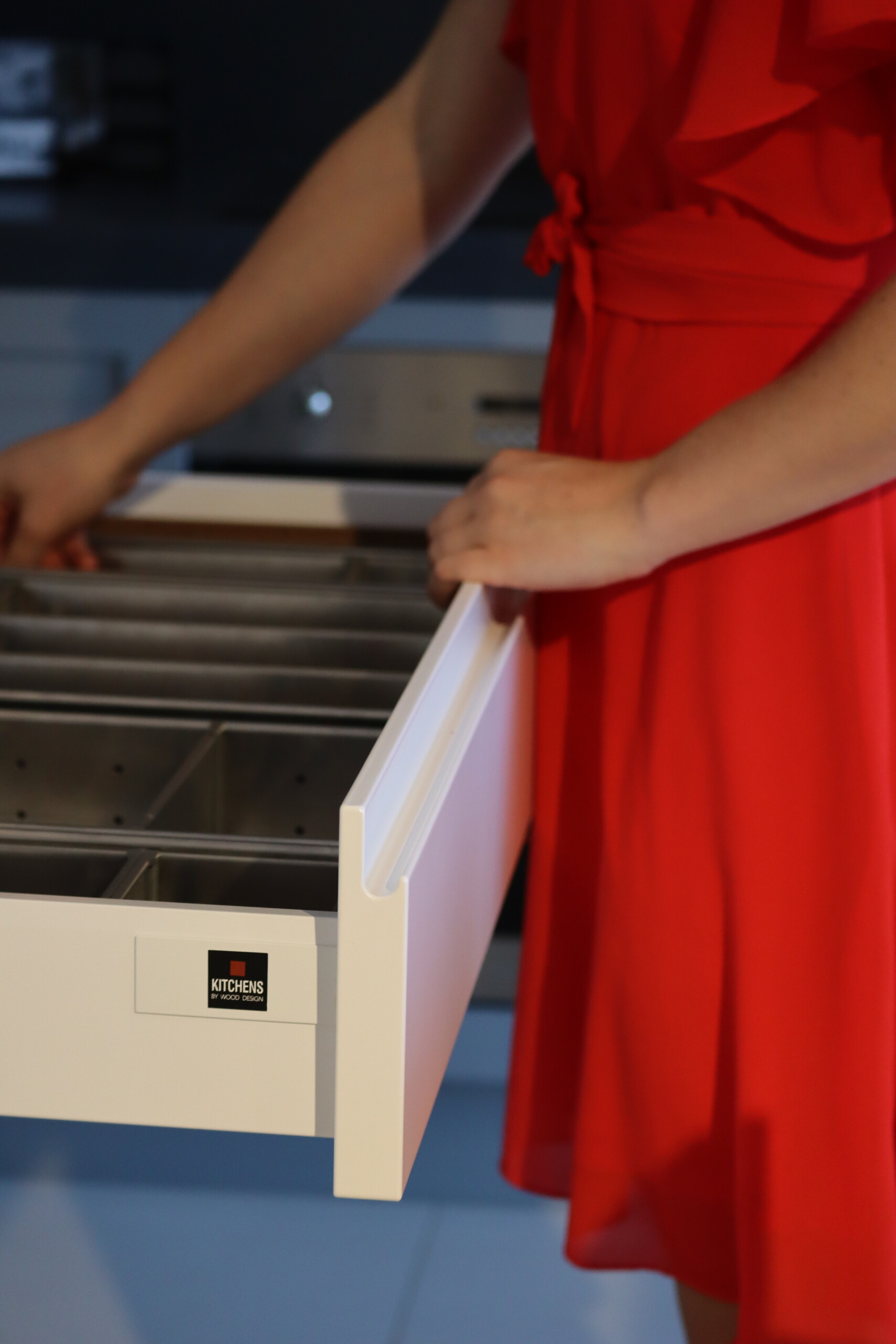
Clients do need to note that with profiles like “Lyne’s” (referred to and shown in the photo) or “Harrell” (lowered drawer fronts), fingers are actually touching the paint on the cabinet fronts on a daily basis, and rings and finger-nails further impact this. As well, moisture left sitting in the recessed groove of the “handle” will, over time, negatively affect the paint surface. Simply wiping this out daily will help to maintain it.
-
For “shaker style” profiles, keeping the joins between the frame and face moisture-free is the key. Again, it’s really a simple matter of wiping up spills as soon as they are noticed.
BENCHTOPS
-
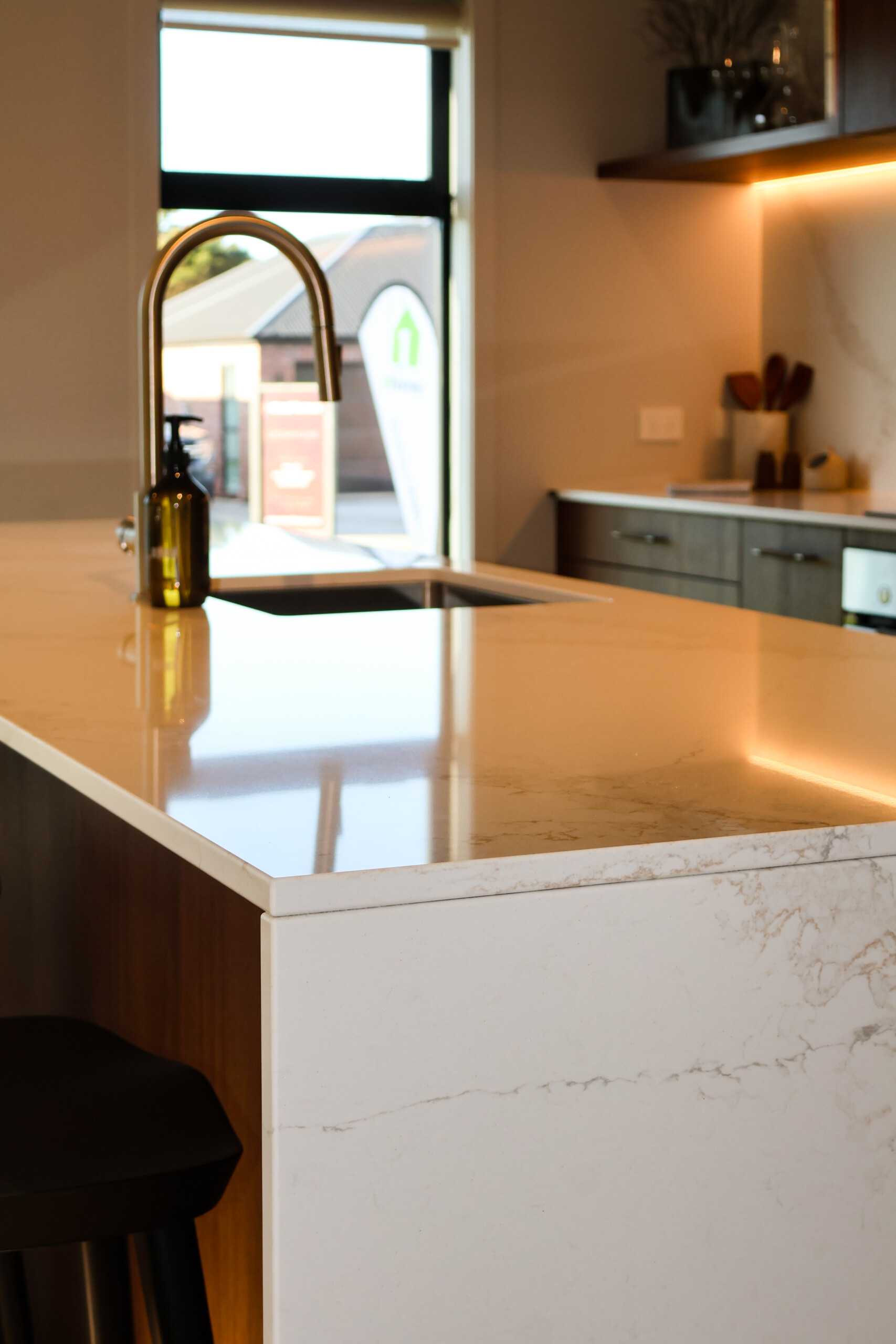
High-pressure laminate (Formica), engineered stone (Silestone) and ceramic (Dekton) surfaces have a non-porous surface and therefore are highly resistant to everyday domestic stains such as red wine or turmeric.
-
Wipe down regularly with water and mild detergent to prevent staining.
-
Various suppliers have their own cleaning liquid on offer; however, regularly wiping down with a damp, soft cloth, and buffing up with a dry one, will keep your benchtop looking great.
-
Natural stone (e.g. granite) or natural timber benchtops ARE porous and special care is required, along with a programme of re-sealing.
-
Do not place hot pots or dishes directly from your oven or cooktop on to your benchtop.
-
Take particular care around edges and corners as chipping can occur if knocked by a hard object.
SINKS
-
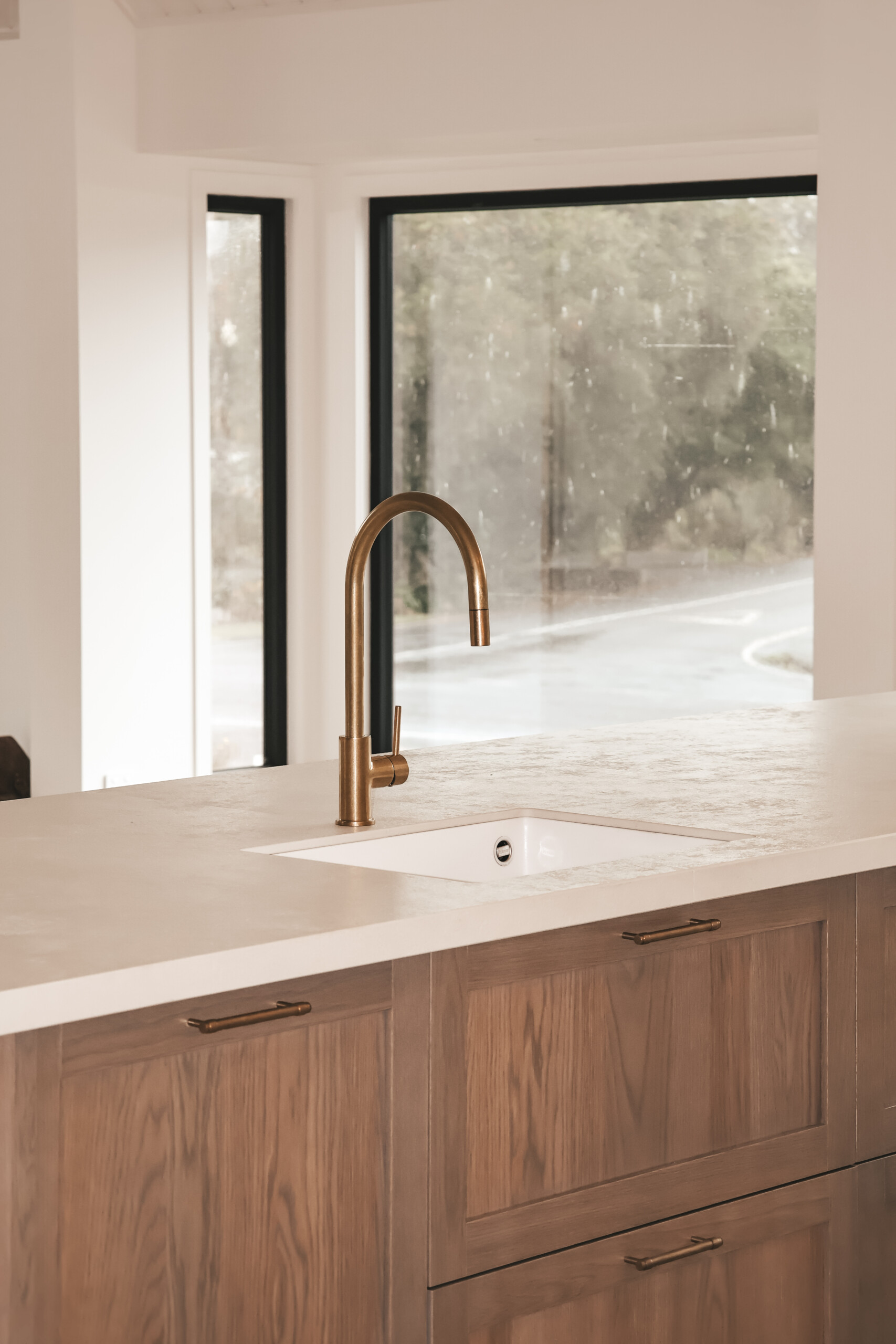
On a daily basis, rinse and wipe out your sink after use.
-
Once a week, soak overnight with hot soapy water e.g. a dishwasher tablet or detergent.
-
White vinegar will break down food & cooking oils left on the surface and also kill bacteria (those pinky looking marks around the waste). Do rinse it away thoroughly, though.
-
For stubborn stains, make a paste from baking soda with a small amount of water added. Rub with a non-abrasive scouring pad. (LEAVE FOR APPROX. 3 MINUTES) then add white vinegar to this mixture and rub with non-abrasive scouring pad (LEAVE FOR APPROX. 5 MINUTES). Rub all around sink with a non-abrasive scouring pad then rinse off. This should remove most marks from all types of sinks.
-
If you have a dark coloured granite sink, wipe it out with olive oil every few months to keep the darker colour looking sharp. The same treatment can be applied to stainless steel sinks to keep fingermarks at bay!
-
DO NOT use highly alkaline substances such as ammonia or caustic soda or even citrus cleaners. (This could cause rusting to any stainless steel surface e.g. sink, stainless steel bench, stove, oven, handles.)
-
DO NOT place hot cooking pots or coffee pots directly from the stovetop into GRANITE OR FIREDCLAY / CERAMIC sinks as this heat can not be measured and could crack your sink.
-
DO NOT pour hot oil down any sink as this could melt the plumbing or crack your sink.
-
DO NOT cut on the surface of your stainless steel, granite or firedclay / ceramic sink with any sharp object
Don’t forget ….
-
The bin drawer: We recommend the use of bin liners, and if these are fitted properly and the bin is not overloaded, keeping your bin drawer clean will be a breeze. Having a spray bottle of a mild cleaning fluid with a nice smell is particularly useful in this area. Each time you empty the bins, give them a quick spray & wipe, along with the internal and edges of the bin drawer itself.
-
Heat from appliances such as hobs, kettles and toasters needs to be managed in your kitchen. Ensure that hobs (especially gas hobs) are not left on after use, and kettles and toasters are pulled out from underneath overhead doors and on-bench pantries before use.
-
Kickboards: Make it a 6-monthly task to wash and dry your kickboards to keep your kitchen looking smart from top to toe.
-
Spring cleaning: All those hidden areas need attention too. Behind the fridge or free-standing oven, in the backs of cabinet carcasses, those top cupboards…. make a regular date for “deep cleaning” to ensure these are kept free of moisture, dust and food residue. This will help to keep your kitchen looking good, for longer.