YOUR CLEANING ROUTINE
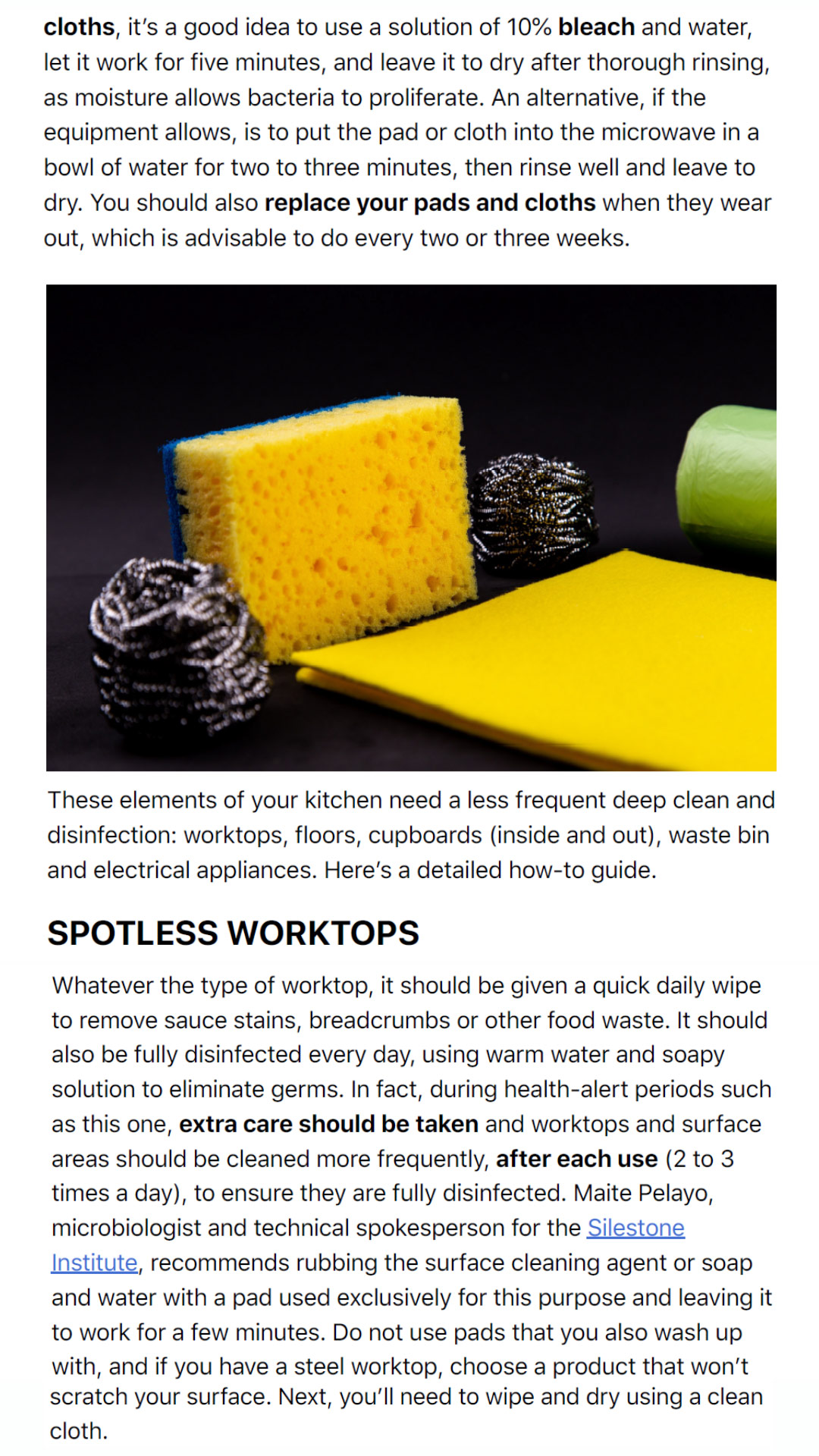
Some areas need a daily clean, namely chopping boards (the best being the plastic ones you can put in the dishwasher or wash by hand and then bleach), the fridge, and scouring pads and cloths. An effective way to clean your fridge is with vinegar, one of the most powerful antiseptics around. And for scouring pads and cloths, it’s a good idea to use a solution of 10% bleach and water, let it work for five minutes, and leave it to dry after thorough rinsing, as moisture allows bacteria to proliferate. An alternative, if the equipment allows, is to put the pad or cloth into the microwave in a bowl of water for two to three minutes, then rinse well and leave to dry. You should also replace your pads and cloths when they wear out, which is advisable to do every two or three weeks.
These elements of your kitchen need a less frequent deep clean and disinfection: worktops, floors, cupboards (inside and out), waste bin and electrical appliances. Here’s a detailed how-to guide.
IMPECCABLE FLOORS
As a general rule, it should be sufficient to sweep or vacuum then mop the floor between three and four times a week. However, given the exceptional circumstances we’re living through, the Silestone Institute recommends giving the kitchen and floor a general clean after cooking, then ventilating the whole area.
CEANING OUT CUPBOARDS
It’s advisable to clean the front of your cupboards with soapy water once a week, paying special attention to handles, where most dirt tends to accumulate. When it comes to insides, these should be given a thorough clean every three months.
WHAT ABOUT WASTE BINS?
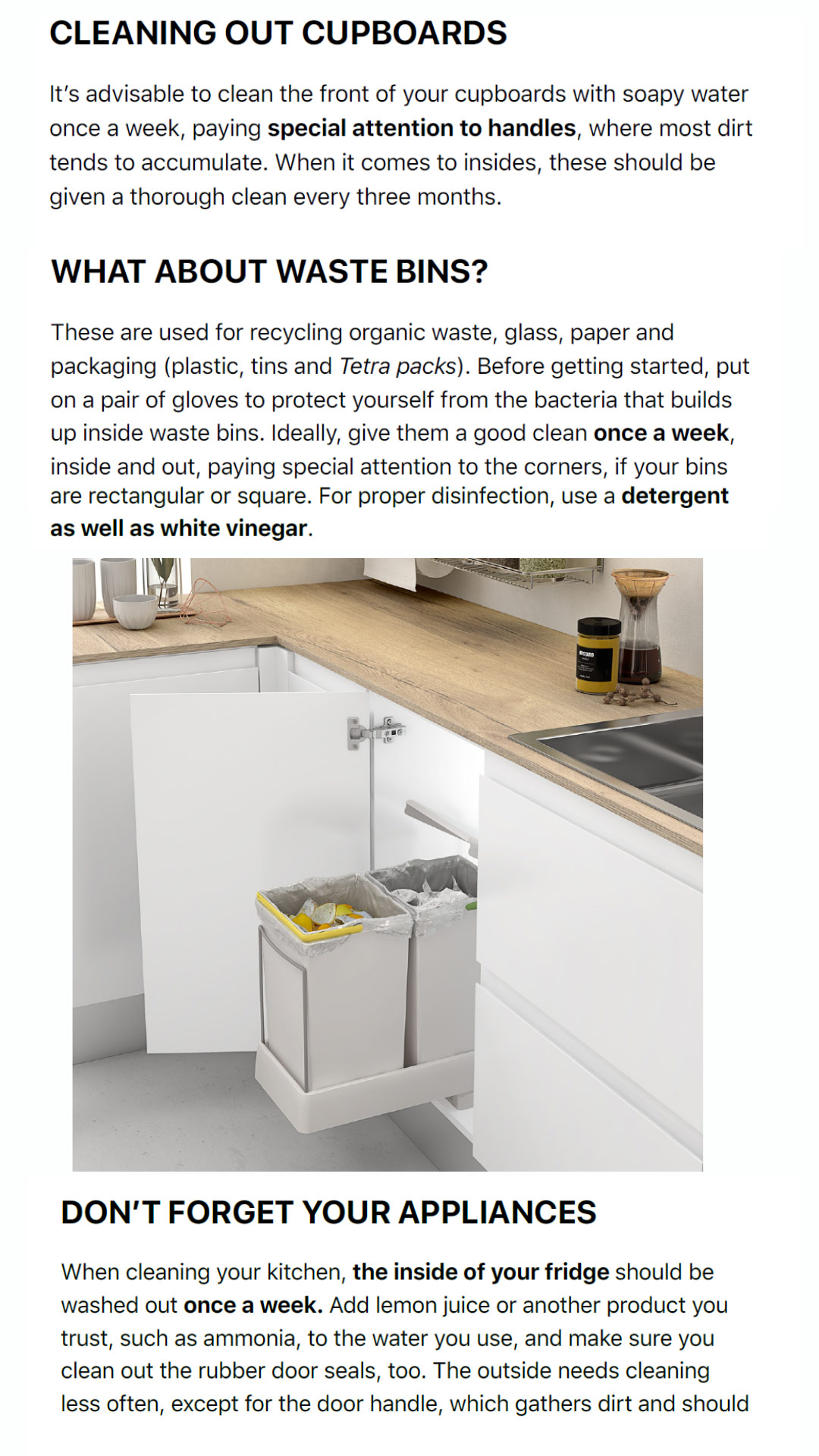
These are used for recycling organic waste, glass, paper and packaging (plastic, tins and Tetra packs). Before getting started, put on a pair of gloves to protect yourself from the bacteria that builds up inside waste bins. Ideally, give them a good clean once a week, inside and out, paying special attention to the corners, if your bins are rectangular or square. For proper disinfection, use a detergent as well as white vinegar.
DON’T FORGET YOUR APPLIANCES
When cleaning your kitchen, the inside of your fridge should be washed out once a week. Add lemon juice or another product you trust, such as ammonia, to the water you use, and make sure you clean out the rubber door seals, too. The outside needs cleaning less often, except for the door handle, which gathers dirt and should be wiped down every day.
It is also important to pay attention to the water tank of your coffee machine, which is one of the five areas with the highest number of germs in the kitchen. Eliminate them with a weekly clean, and do the same for all your other equipment, such as the kettle and toaster, but not the oven, which should be wiped down after every use. If that feels too tedious, choose a pyrolytic oven with a self-cleaning function. These are also more eco-friendly as they don’t need to be cleaned with solvents or any other chemical pollutants.
INFREQUENT BUT NECESSARY CLEANING
Finally, give a twice-yearly clean to those large hidden and forgotten areas under the plinths of your cupboards or behind the fridge, for example. These spaces gather dust and need special attention when giving your kitchen a thorough clean. Take the opportunity to dust and wipe down hidden floor tiles, too.
SOME EXTRA TIPS FOR A DEEP DISINFECTION OF YOUR KITCHEN
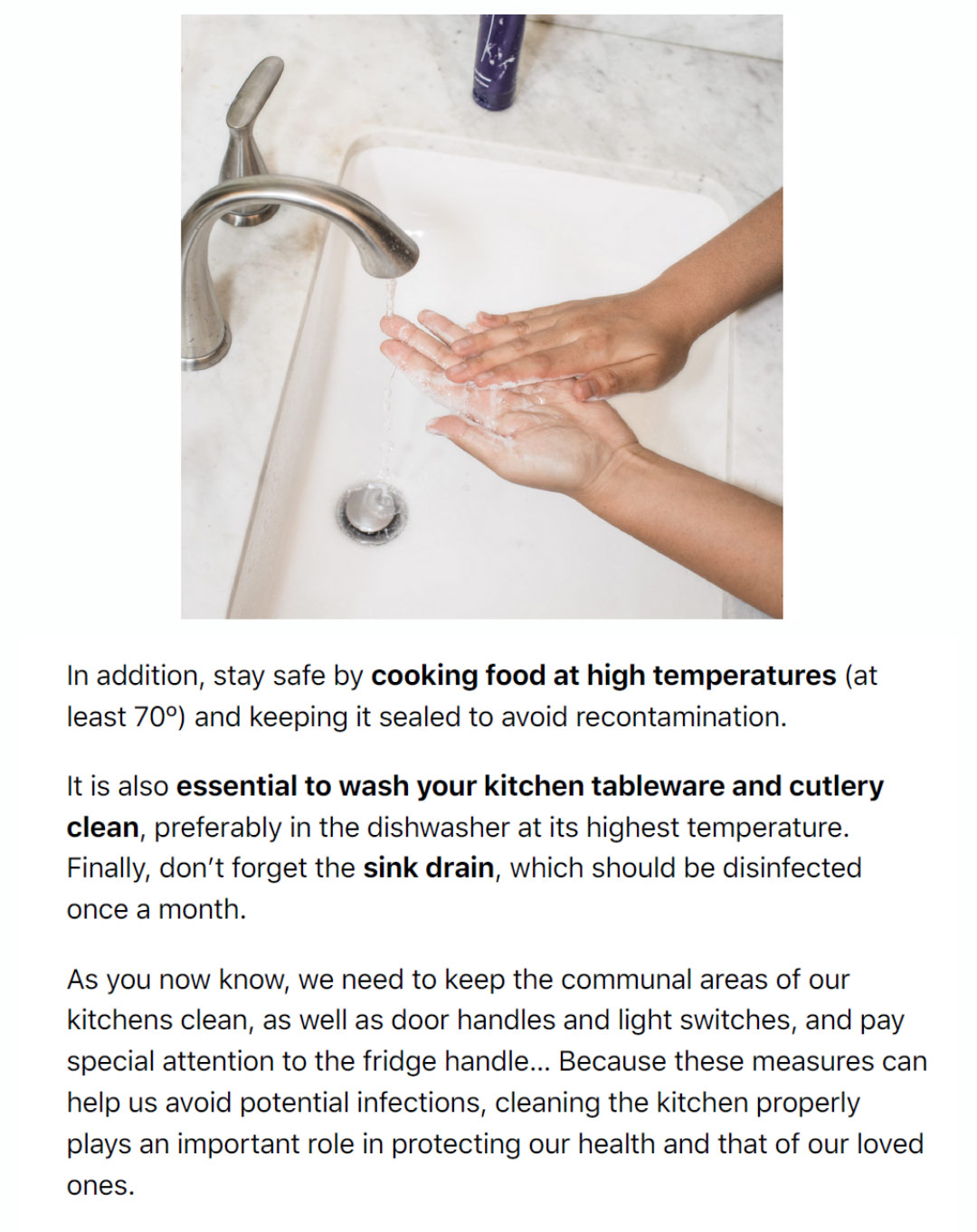
There’s no point cleaning your kitchen thoroughly if you start the task with dirty hands. A quick rub and rinse is not enough to eliminate every trace of virus or bacteria from your hands, so take at least a minute to wash with warm water and soap, lathering vigorously for at least 20 seconds all over your fingers, the backs of your hands and wrists, before rinsing with plenty of water. To dry your hands, use a clean cloth or a disposable paper towel.
In addition, stay safe by cooking food at high temperatures (at least 70º) and keeping it sealed to avoid recontamination. It is also essential to wash your kitchen tableware and cutlery clean, preferably in the dishwasher at its highest temperature. Finally, don’t forget the sink drain, which should be disinfected once a month. As you now know, we need to keep the communal areas of our kitchens clean, as well as door handles and light switches, and pay special attention to the fridge handle… Because these measures can help us avoid potential infections, cleaning the kitchen properly plays an important role in protecting our health and that of our loved ones.